
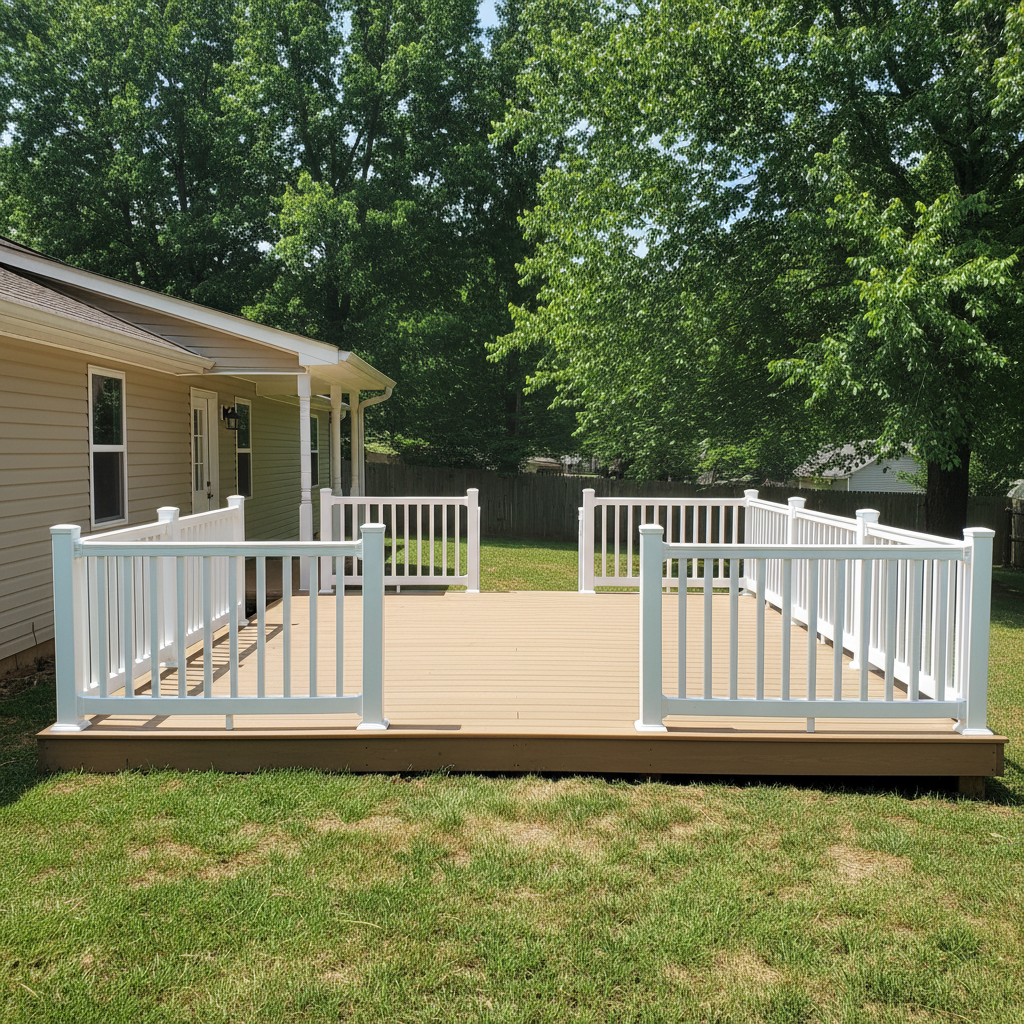
Daphne sits on sandy soil near the bay and heavier clay the further you get inland toward Spanish Fort and Highway 181. That one fact changes how a deck gets built here. A footing that's fine in beach sand can heave or settle in clay once the ground swells with a wet winter and shrinks in a dry August. A builder who's worked this area for a while knows which streets need wider footings instead of deeper ones, and which lots have a water table close enough to the surface that you can't dig much past 18 inches without hitting standing water. That's local knowledge you can't get from a brochure, and it's worth asking about directly.
Ask about the permit before you ask about the price
Any deck attached to the house, and most freestanding ones over 30 inches off the ground, need a permit through the City of Daphne or Baldwin County, depending on where the lot sits. A legitimate builder pulls it themselves and schedules the inspections: footing depth and spacing before concrete goes in, then framing and ledger attachment before the decking goes down. If someone tells you permits are a waste of time or money, that's not a shortcut, it's a liability you're inheriting. An unpermitted deck can hold up a home sale later, and insurance companies have been known to deny a claim on a structure that was never inspected.
If you're in an HOA neighborhood, which covers a good number of the newer subdivisions off County Road 13 and around Lake Forest, you'll likely need a separate design approval before the city permit even gets filed. Ask your builder if they've dealt with your HOA before. It saves weeks.
What's actually holding the deck up matters more than what's on top of it
The decking board is the part you touch. The footings, the ledger board, and the joist hangers are the part that keeps the whole thing from ending up in the yard. Footings here typically run 12 to 18 inches deep with a bell or flare at the bottom to spread the load, sometimes deeper in softer or wetter soil. The ledger board, the piece bolted to your house, has to be flashed properly so water doesn't track behind it into the band joist. On the Gulf Coast, where you get long stretches of humidity and heavy summer rain, a poorly flashed ledger rots from the inside and you won't see it until the deck starts to pull away from the house.
Ask what fasteners they're using. Galvanized hangers corrode faster than stainless in this climate, especially on a deck near the bay where salt air speeds things along. A few extra dollars per hanger is nothing compared to replacing a joist in five years.
Material choice changes your maintenance schedule, not just your budget
Pressure-treated pine is the cheapest way to frame and deck a structure, and it's rated for ground contact where it needs to be. It also needs restaining every 1 to 2 years here because the heat and UV from May through September break down a sealer fast, and the humidity that follows invites mildew into anything left bare. Composite decking costs more up front, generally two to three times the material cost of pine, but it doesn't need staining and holds up better against the swings between a wet June and a dry, blazing July. Neither is wrong. The question is whether you want a lower bill now or a lower bill over the next fifteen years.
If you're building a pool deck, drainage and slip resistance matter more than they do anywhere else on the property. Standing water around a pool deck in this climate turns algae-slick fast. A builder who's done pool decks before will grade the surface and space the boards to shed water instead of pooling it.
What to walk away from
- A bid with no mention of footing depth, ledger flashing, or permit responsibility. If it's just a square footage price, you don't know what you're paying for.
- Anyone who wants the full payment up front. A deposit is normal. The full balance before the work is done is not.
- No proof of license and insurance. Ask to see it, not just hear about it. If a worker gets hurt on your property and the contractor isn't covered, that liability can land on you.
- A timeline that sounds too fast. A straightforward 300-square-foot deck usually runs two to three weeks from footing inspection to final sign-off, longer if it includes a screened porch or custom railing. A quote of three or four days for the same job usually means corners are getting cut somewhere you can't see yet.
Older homes and newer subdivisions aren't the same job
A lot of the housing around Olde Towne Daphne and the older streets near the bayfront went up decades ago, and the band joists and rim framing on those houses weren't always built to carry the loads a modern deck code expects. A good builder checks the condition of that framing before bolting a new ledger to it, and will tell you honestly if it needs reinforcing first. Newer subdivisions built over cleared farmland tend to have more consistent, compacted fill, which usually makes footing work more predictable, but drainage can still be an issue if the lot wasn't graded well when the house was built. Either way, ask the builder to walk the site with you and point out what they see before they ever write up a design.
Hurricane season runs June through November on this part of the coast, and wind load matters for railing posts and how the ledger is lagged to the house. It's a fair question to ask: is this deck built to hold up in a tropical storm, not just look good on a calm Saturday afternoon.
None of this means you need the most expensive bid or the fanciest design on paper. It means you need someone who can answer these questions without reaching for a brochure. That's the standard we hold our own deck builder work to on every job in Daphne and the surrounding towns.