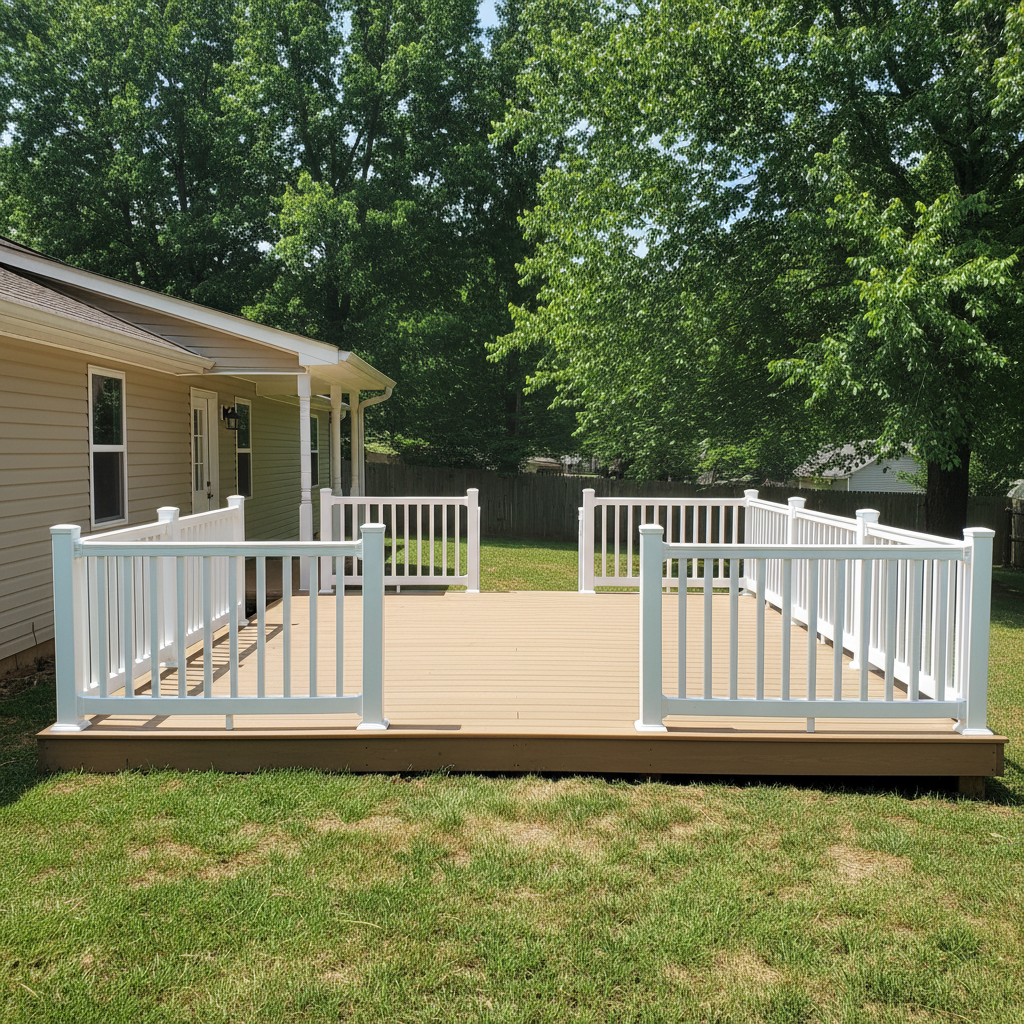
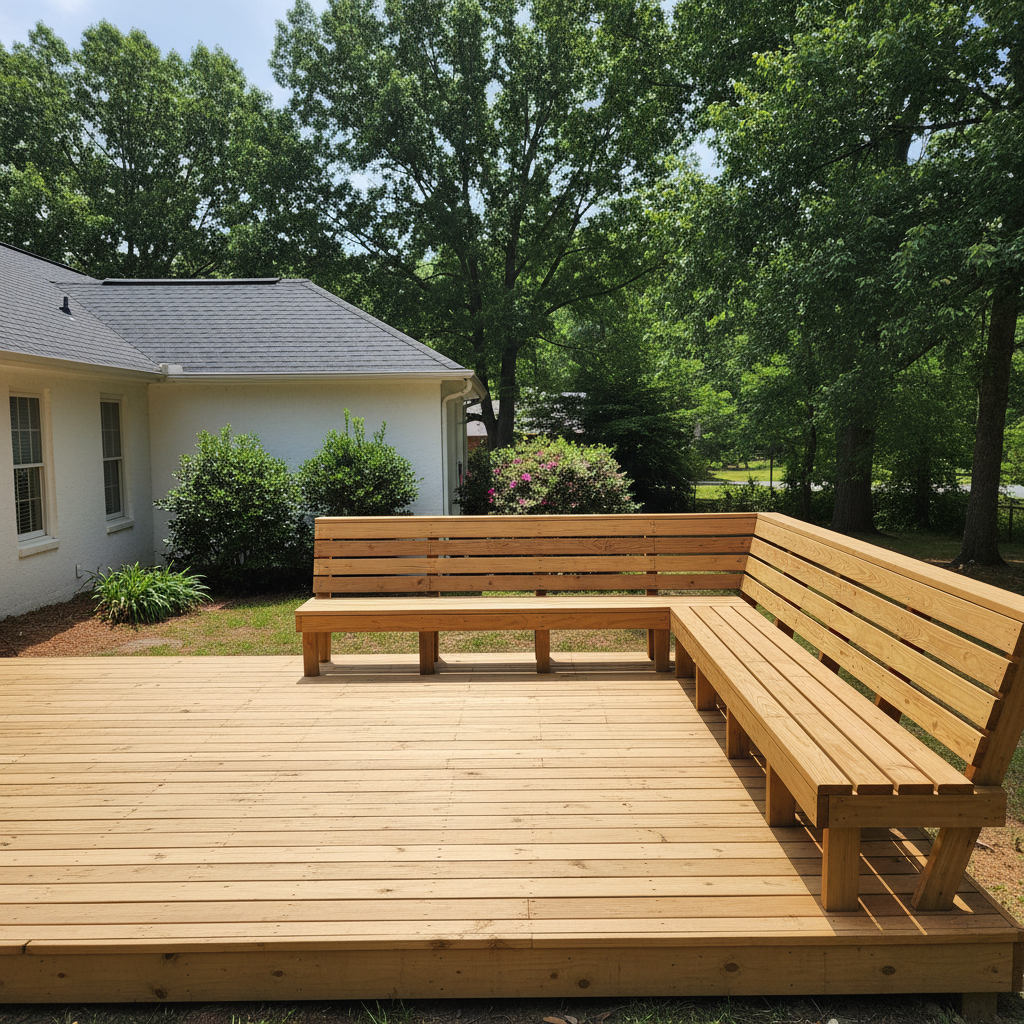
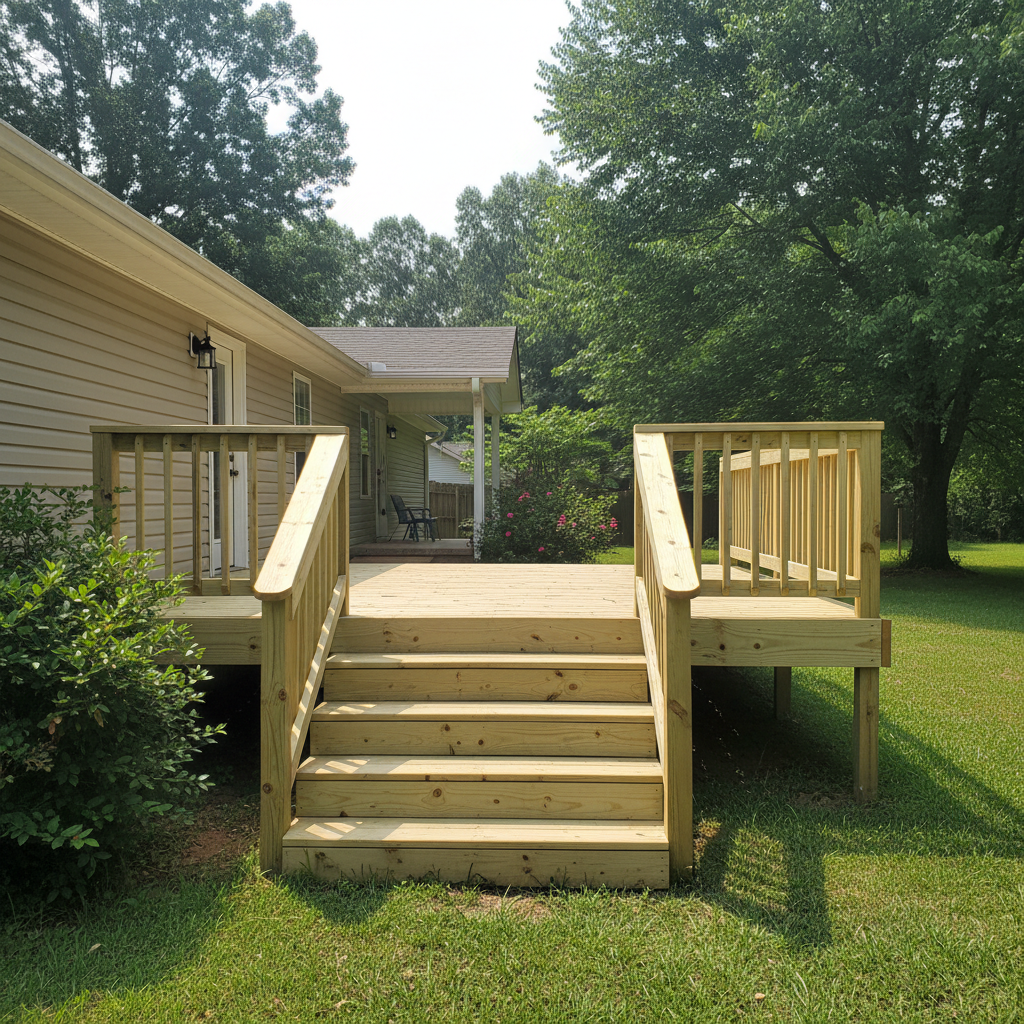
Every job below is one we do ourselves across Daphne.
We build decks from pressure-treated pine or composite boards, set on concrete footings poured below grade. Joists go down at 16 inches on center, and the ledger board gets flashed before a single board goes on, since that's where most rot starts. Most jobs run two to three weeks depending on size and whether we're waiting on a permit inspection.
Soft spots in the decking, wobbly railings, and joists that have started to sag are the calls we get most. We pull boards to check the frame underneath before patching over it, because a new board over a rotten joist fails again within a year. Sometimes the fix is a few boards and some hardware, sometimes it's half the substructure.
Alabama humidity is hard on exposed wood, and pressure-treated pine left unsealed will gray and crack within a season or two. We pressure wash first, let the boards dry for a couple of days, then apply a penetrating stain rated for Gulf Coast sun and rain. Plan on resealing every one to two years to keep water out of the end grain.
Multi-level decks, built-in benches, a pergola over part of the deck, the layout gets built around how you actually use your yard, not a stock plan. We walk the site, check the grade, and figure out where footings can go before anything gets drawn up.
Composite boards like Trex or TimberTech don't rot and don't need staining, which matters if you don't want a sealing job on your calendar every spring. The substructure underneath still has to be built right, joists spaced correctly and the ledger flashed, since composite can hide water damage underneath longer than wood does.
Alabama code calls for railings on any deck over 30 inches off the ground, with balusters spaced so a 4-inch sphere can't pass through. We build wood, cable, and aluminum railing systems, and check post spacing against the span before setting anything, since a railing that flexes isn't attached right.
If the frame underneath is solid but the decking itself is cupped, splintering, or worn out, we strip it down to the joists and start fresh with new boards. It's a faster, cheaper job than a full rebuild when the substructure checks out.
A lot of homeowners here want part of the deck open and part of it screened in to get out of the no-see-ums in the evening. We frame the screened section separately so it carries its own roof load, then tie the open deck in alongside it.
Pool decks take more abuse from standing water and pool chemicals than a regular deck, so fasteners rated for that get used and boards get spaced a little wider for drainage. Composite or capped PVC decking holds up best around a pool, since bare pressure-treated wood near chlorinated splash gets rough fast.
Old decks that are rotted past saving need to come out before anything new goes up on the same footprint. We haul off the old lumber and check the footings underneath, since sometimes they're reusable and sometimes they're not up to current code.
Four steps, and no surprises in any of them.
You tell us what you want doing, we look at what is actually there, and we ask the awkward questions early.
In writing, itemised, free. If something might add cost later we flag it now rather than at the end.
Same crew throughout. We cover your floors, keep the dust down and tidy up before we leave each day.
You point out anything you are not happy with and we fix it before the invoice, not after.
This is the ground covered for deck installation and repair work.
Questions that come up once a deck project is actually underway.
Describe the problem and we will tell you what it probably is. No obligation.